Tuesday, March 17, 2020

Mastagni Firm Responds to Release of Elk Grove PD Video Depicting June 5, 2019, Arrest of Robbery Suspects


Additional information and facts not previously released
Elk Grove, California – On March 12, 2020, the Elk Grove Police Department released a video depicting the arrest of two (2) suspects who engaged in a violent altercation with employees during a robbery at the Burlington Coat Factory on June 5, 2019.  This video omitted relevant facts available to the officers, and failed to consider the applicable legal standards governing the officers’ actions. The appropriateness of the officers’ actions is in the process of being adjudicated.

Because the Department released selective information regarding this incident prior to affording Officer Schmidt his due process rights, this video is being released to provide the public all relevant facts constituting the “totality of the circumstances” and the legal justifications for force.  Under A.B. 392, law enforcement use of force is evaluated under the “totality of the circumstances”, defined as all facts known to the peace officer at the time, including the conduct of the officer and the subject leading up to the use of force.

MastagniHolstedt, A.P.C., a law firm specializing in representing first responders and their employee associations, asked Sean McCann, an expert in police tactics and training, to review the video released by the Elk Grove Police Department, as well as the dispatch advisements to the officers.  This video contains Mr. McCann’s opinions on the appropriateness of Officer Schmidt’s actions.

Here is a link to the video produced to discuss the additional facts and provide the analysis: 

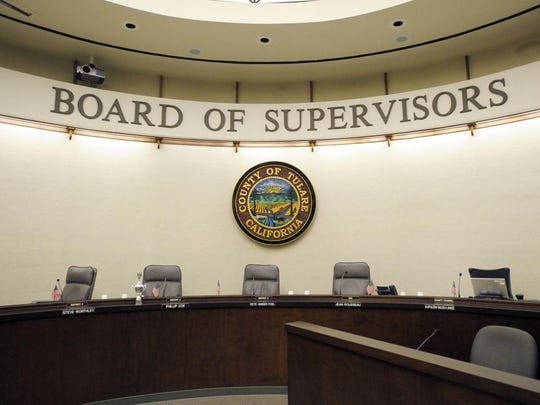
PERB Clarifies MMBA Protects Union Members Who Send Emails to County Board of Supervisors Advocating for MOU Terms


Recently, the Public Employee Relations Board (“PERB”) ruled that a union representative engaged in MMBA-protected advocacy by sending e-mails to the County Board of Supervisors in order to persuade the Supervisors to direct the County to put “money on the table.”


In County of Tulare, Charging Party, v. Service Employees International Union Local 521, Respondent; Service Employees International Union Local 521, Charging Party, v. County of Tulare, Respondent 44 PERC ¶ 141, Tulare County filed an unfair labor practice charge alleging that Service Employees International Union (“SEIU”) violated the Meyers-Milias-Brown Act (“MMBA”) by engaging in bad faith bargaining during negotiations for a memorandum of understanding (MOU).

Specifically, the Tulare County claimed that SEIU unit representative Kermit Wullschleger lost the MMBA’s protection for advocacy when he sent several e-mails to the County’s Board of Supervisors advocating proposals that had already been made in prior negotiations. The county claimed this was an MMBA violation because it was “direct dealing.”

However, PERB did not find that Wullschleger’s behavior was an unfair labor practice. In fact, PERB clarified that: “an exclusive representative has a right to engage in direct and indirect advocacy with an employer’s elected and unelected officials, up to and including the employer’s highest levels, provided that the exclusive representative does not make new collective bargaining proposals that the exclusive representative has not already made in negotiations with the employer’s chosen bargaining team.”  As the PERB decision highlighted, the union was “well within its right to public advocacy.”

This is an important reminder that Union negotiations teams are permitted to directly advocate with their respective Board of Supervisors during contract negotiations.  

Friday, February 14, 2020

Mastagni Holstedt Wins Cancer Presumption Exception for Imperial County Probation Officer

In California Workers’ Compensation law, injured workers must normally prove the alleged injury was caused by their job duties (to the standard of a reasonable medical certainty). Over the years, the California legislature has recognized the unique and demanding job duties public safety officers and other first responders face and outlined specific, presumptive injuries. This was done in an effort to make Workers’ Compensation claims and treatment process quicker. One such presumption is cancer. However, each presumption specifically designates who will qualify as a matter of law. These designations are not normally subject to review by the courts. Furthermore, probation officers are categorically excluded in the statutory language of the cancer presumption.

CareersNotwithstanding the statutory exclusion,  Mastagni attorney Brendan B. Rochford successfully argued for an exceptional application of the cancer presumption (William Dallas Jones Cancer Recovery Act (“Act”)), otherwise known as Labor Code §3212.1, to Imperial County Probation Manager Iran Martinez. Raising multiple factors, Mr. Rochford successfully demonstrated Martinez was performing the usual and customary duties of a special agent for the State of California as classified in PC 830.1(b), entitling him to the cancer presumption. The Workers’ Compensation Appeals Board of San Diego agreed and granted Officer Martinez an exception to the presumption. This should soon result in Martinez receiving the benefits for an accepted cancer claim.

The presumptions set forth in Labor Code §3212.1  apply to peace officers sworn under Penal Code §830.1, not to peace officers sworn under Penal Code §830.5. Probation officers in California are sworn under Penal Code §830.5. Attorneys for the County of Imperial argued Officer Martinez’ sworn status precluded him from eligibility under the Act. Relying on Reeves v. ­­­­WCAB, Mr. Rochford countered that Officer Martinez’ job duties as a Narcotics Task Force Officer/Special Agent were also critical factors in the Court’s analysis.

The Court agreed and found that Officer Martinez’ job duties, along with other circumstances including his training, equipment, and title of “Special Agent Martinez,” entitled him to classification as a special agent under Penal Code §830.1(b). After reviewing the deposition of the doctor, the Court further agreed that Officer Martinez’ entitlement to the presumption should clear the way for Workers’ Compensation benefits due to the nature and timing of his injuries. It is on this basis that an order was issued compelling Worker’s Compensation benefits. The decision recognizes the inequity of ordering a probation officer to perform traditional police duties that place them in harm’s way, without affording them the same Workers’ Compensation benefits enjoyed by other PC 830.1 (b)members of the Task Force.

This case speaks to the importance of not giving up on a serious Workers’ Compensation claim simply due to a denial of the presumption based on Penal Code designation. The actual job duties performed at work are crucial factors in determining whether you will be found eligible for a Workers’ Compensation presumption. A consultation with an experienced Workers’ Compensation attorney may be the difference in qualifying for Workers’ Compensation benefits under a public safety presumption.

This decision was recently signed by Workers’ Compensation Judge Wade DiCosmo on January 31, 2020. Defendant enjoys a right to file a Petition for Reconsideration. Updates to be provided accordingly.

Brendan Rochford is a valuable member of the Mastagni Holstedt, A.P.C. team, successfully litigating Worker’s Compensation claims for public safety officers throughout California. As demonstrated by his success in this case, he is well versed in applicable presumptions. He is based in Rancho Cucamonga and regularly appears at the Worker’s Compensation Appeals Boards in San Diego, Riverside, San Bernardino, Pomona, Van Nuys, Santa Barbara, Anaheim, Santa Ana, Los Angeles, Bakersfield, Oxnard, and San Luis Obispo.


Wednesday, February 12, 2020

AG Grants IAFF Local 1319's Application to Sue "Quo Warranto" to Enforce Appellate Ruling Invalidating Repeal of Interest Arbitration


On behalf of the International Association of Firefighters, Local 1319 (“Local 1319”), Kathleen Mastagni-Storm and Tashayla Billington received the Attorney General’s blessing to sue the City of Palo for violating the MMBA by repealing its Charter’s binding interest arbitration procedures for the police and fire unions.

On July 18, 2011, Palo Alto City Council adopted a resolution to place Measure D on the ballot to repeal binding interest arbitration for the police and fire unions. Local 1319 asserted its right to “meet and consult” under the Meyers-Milias-Brown Act (“MMBA”). The City refused. Local 1319 received favorable decisions from both the Public Employment Relations Board (“PERB”) and the Sixth District Court of Appeal, finding the City violated the MMBA. 

In City of Palo Alto v. Public Employment Relations Board (2016) 5 Cal.App.5th 1271, the Court of Appeal held binding interest arbitration is a mandatory subject of bargaining under Government Code section 3507.  As a result, the Court found the City violated the Meyers-Milias-Brown Act when it pushed through a local initiative to repeal binding interest arbitration while refusing to bargain with Palo Alto Firefighters, IAFF Local 1319.  The Court upheld PERB's factual determinations and rejected the City's arguments. (See "Court of Appeal: MMBA Requires Bargaining Over Binding Arbitration")
Despite the rulings against it, the City refused to reinstate binding interest arbitration. As a result, Local 1319 was forced to file an application to sue quo warranto to challenge the validity of the City’s charter provision.  Although the legal remedy of quo warranto—which requires the Attorney General’s approval to invoke—is most commonly used to contest a person’s entitlement to hold a public office, it may also be used to contest the validity of a city or county charter provision. The quo warranto application is typically filed after the completion of other, related litigation.

To authorize a quo warranto action, the Attorney General must find: (1) that quo warranto is the
appropriate remedy, (2) that the application raises a substantial issue of law or fact that warrants a judicial resolution, and (3) that allowing the proposed quo warranto action to proceed will serve the public interest.

On February 7, 2020, the Attorney General granted theapplication, finding Local 1319 raised a substantial question to be decided by a court – i.e. whether Measure D should be overturned based on the City’s violation of the MMBA.  The Attoreny General explaiend:

"Specifically, an employee organization of a charter city, with the Attorney General’s permission, may sue the city in quo warranto to challenge the validity of a charter amendment on the ground that the city unlawfully exercised its franchise by placing the amendment on the ballot without first complying with the MMBA’s consultation requirements.  As the Court of Appeal found here, “an action in quo warranto is the exclusive remedy to challenge the ballot initiative to repeal article V of the city charter” on the ground that the City did not consult in good faith with Local 1319 before placing  Measure D on the ballot."

The opinion also agreed that, “as Local 1319 point[ed] out, ‘the public has an interest in ensuring charter amendments are validly enacted in accordance with the law and securing stable employer-employee relations.’” This confirms statutes, like the MMBA, serve an important public interest to improve labor relationships within public agencies. 

Through this litigation, Local 1319 has vindicated important MMBA rights precluding the unilateral modification of impasse proceedures, even if enacted by ballot measure, and authorizing quo warranto proceedings to invaldiate such charter amendments.
 

Thursday, January 9, 2020

PERB Clarifies that Confidential Directives Given During Internal Affairs Investigations Violate Police Officer Rights


In a recent proposed decision, the Public Employees Relations Board (“PERB”) ruled that a “confidentiality directive” given to police officers in connection with an administrative investigation interfered with officer's protected rights under the Meyers-Milias-Brown Act (“MMBA”). The directive specifically instructed offers not to discuss the investigation with the union.  The case, Oakdale Police Officers Association v. City of Oakdale began after a union representative informed the City that they believed the confidentiality directives issued to several Sergeants were unlawful. The union demanded that the City cease and desist issuing the confidentiality directives as part of the ongoing investigation and requested corrective notices be sent to all interviewed employees.

 As discussed in the decision, the MMBA forbids an employer from interfering with employee’s exercise of their rights guaranteed by the MMBA, including the right to form, join, and participate in the activities of employee organizations of the employees own choosing. It is also unlawful for an employer to deny employee organizations the rights guaranteed to them by the MMBA, including the right to represent their members.

With that in mind, PERB held that the Union established that the City interfered with employee protected rights when it issued the confidentiality directives to both the percipient witnesses and subjects when it barred them from discussing the investigation with other employees. Specifically, the confidentiality directives issued to the four percipient witnesses did not simply limit them from having union representation present during their interview; it was a broad directive prohibiting them from communicating with their exclusive representative at all on the matter. Because each witness had a protected right to discuss the investigation with their exclusive representative, the City also interfered with employee protected rights when it issued the confidentiality directives to the witnesses and subject barring them from discussing the investigation with the Union.

This case serves as an important reminder that overly broad “confidential directives” given at Internal Affairs are in violation of police officer rights.